Building a Clear Bankroll Plan
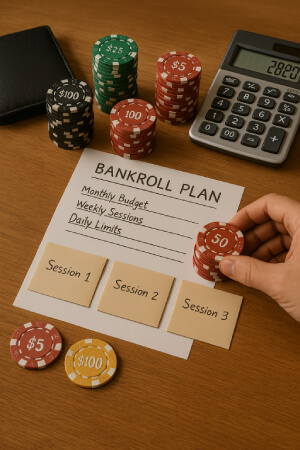
A bankroll is the amount of money a player allocates exclusively for gambling. Treating the bankroll as separated from daily finances is the foundation of responsible play. The goal is to manage this money in ways that prevent overspending and minimize emotional decision making.
Define a Fixed Budget
Selecting a gambling budget is the first step and it should be based on the player's very own money that can be used for this purpose. It should be an amount that the player will not mind losing and will not make him/her dissatisfied as he/she will be making this expense instead of others. Having set a budget, it is the maximum amount of money that can be used in a single gaming session, over a week or month, according to one's choice.
A predetermined bankroll brings along some order. Players do not run after losses but work with the established limitations which makes it less likely for them to make rash choices.
Divide the Bankroll Into Sessions
A common mistake is using the entire bankroll in one long session. Breaking it into smaller portions creates more controlled play. For example, a monthly bankroll can be divided into weekly or daily sessions. Each session has its own limit, and reaching that limit means stopping for the day.
This approach prevents extended losing streaks from consuming the entire bankroll quickly.
Interpreting Variance and Randomness
Variance refers to how unpredictable results are across short timeframes. All casino games involve variance, but some games fluctuate more than others. Slots and roulette show high variance, while blackjack and baccarat tend to be steadier when using consistent bet sizes.
Short Term Swings vs Long Term Reality
Grasping the concept of variance enables the players to control their emotions and not respond to the short-term results. A series of losses does not mean that the situation is dire, and winning streaks are not a good indication of future wins either. Variance brings about short-term emotions that are not in line with long-term probabilities.
One of the most common mistakes that players who do not understand variance make is to make quick decisions that negatively affect their bankroll. These decisions include, for instance, raising the bets considerably in order to get back the money lost.
Choosing Games Based on Variance Comfort
Some players prefer steady, predictable play, while others enjoy high-risk, high-reward options. Bankroll management involves choosing games that align with personal variance tolerance. Low volatility slots, simple roulette bets and basic baccarat play suit cautious players. High volatility slots or aggressive craps bets create sharp swings and require a larger buffer.
Understanding this balance helps players select games that support bankroll stability.
Determining Smart Bet Sizes
Choosing appropriate bet sizes is essential for maintaining control. Bet sizes determine how long a bankroll lasts and how much variance impacts the session.
The One to Three Percent Rule
A widely accepted guideline is betting one to three percent of the total session bankroll per wager. This ensures that even during losing streaks, players maintain enough funds to continue playing without rushing into risky decisions.
Betting larger percentages dramatically increases the risk of depleting the bankroll quickly, especially in high variance games.
Pacing Sessions for Long-Term Stability

Proper pacing is one of the most overlooked components of bankroll management. Many players lose control not because of the games themselves, but because sessions become rushed, emotional or overly extended. Pacing helps keep decisions rational and supports responsible play habits.
Set Time Limits, Not Just Money Limits
It is common for players to set financial limits but neglect time limits. The longer the sessions, the more tired the players become and the less disciplined they are. Setting up a specific time frame — for example, thirty minutes or an hour — keeps the gaming structured and prevents the players from going beyond their limits.
Players stay more objective if they have shorter sessions. It is easier to get up at the right time, instead of following the results, if one has gone through the mental "resets" that are caused by the frequent breaks.
Avoid Rapid-Fire Betting
Fast decision cycles often lead to higher losses. Rapid spins, quick-fire wagers or auto-play features can burn through a bankroll before a player realizes what is happening. Slowing down gives players time to consider each decision, especially in skill-based games like blackjack or craps.
A calm and deliberate pace improves decision-making quality and reduces emotional impulses.
Track Wins and Losses During Sessions
Keeping simple notes — even mentally — on current balance, session results and wager sizes increases awareness. When players track progress, they are less likely to bet impulsively and more likely to stay within limits.
Tracking also helps identify patterns of behavior, such as increasing bet sizes when frustrated or extending sessions after small wins.
Avoiding Self-Defeating Behaviors
Many bankroll problems come from behavioral tendencies rather than mathematical realities. Understanding these tendencies and identifying them early protects both the bankroll and the player’s overall experience.
Overconfidence After Wins
Winning streaks feel good, but they often lead to overconfidence. Players may start placing larger bets, believing they are “playing with house money.” This mindset ignores the independence of each game event.
To avoid this trap, players can lock in a portion of winnings or set a “stop-win” limit, ensuring profits are protected rather than risked impulsively.
Emotional Tilt
“Tilt” refers to emotional frustration that leads to irrational decisions. Tilt can happen after losses, unexpected outcomes or even during long sessions. Recognizing tilt early and taking a break prevents decisions that contradict bankroll rules.
Stepping away for a short break — or ending the session entirely — is the best solution.
Keeping Gambling Entertainment-Focused
Bankroll management works best when gambling is treated as entertainment, not a source of income. Viewing gambling as a form of paid entertainment shifts expectations toward enjoyment and away from unrealistic goals.
Enjoyment Over Outcome
Players who focus on the experience rather than the result tend to make more rational choices. They pace sessions, manage bets responsibly and maintain healthier habits because the goal is enjoyment, not profit.
Adapting Bankroll Management to Different Game Types
Even though the basic bankroll guidelines do not change from the one game to another in a online casino, each type of game comes along with its own pace, variance and decision-making structure. It is possible to have more controlled sessions and more realistic expectations if players tailor their bankroll strategies to the particular game they are playing.
Slots: High Variance and Fast Pace
Online slots often involve rapid gameplay and higher variance than most table games. Wins may come in bursts, followed by long stretches of losses. Because slots can cycle through spins quickly, bankroll strategies must account for their speed and volatility.
Key guidelines include:
- Using smaller bet sizes to extend session length
- Avoiding frequent use of auto-spin
- Recognizing that bonus rounds may take many spins to trigger
- Expecting large fluctuations in overall balance
Lower volatility slots are more compatible with budget-conscious players, while high volatility slots require a larger buffer and stronger emotional discipline.
Blackjack: Strategy-Driven Stability
Blackjack offers one of the most stable bankroll environments when players use basic strategy and keep bet sizes consistent. Because skill influences expected value, bankroll management in blackjack focuses on avoiding impulsive bet size changes and maintaining discipline during losing streaks.
Effective approaches include:
- Keeping bet size fixed or nearly fixed
- Avoiding doubling bet sizes after losses
- Using breaks to maintain focus for strategy decisions
- Tracking session results to remain objective
Players who drift from optimal strategy often experience sharper swings, even with good bankroll discipline.
Roulette: Pure Probability and Clear Risk Levels
Roulette has no skill component, which means bankroll management depends entirely on risk tolerance. Low-risk outside bets (red/black, even/odd) produce longer, steadier sessions, while high-risk inside bets introduce significant variance.
Bankroll strategies include:
- Matching bet sizes to volatility preference
- Avoiding complex betting systems that encourage progressive losses
- Keeping sessions short to avoid fatigue-based decisions
- Remembering that probabilities reset every spin
Understanding that no betting pattern changes odds is essential for long term bankroll health.
Baccarat: Predictable, Low Decision Pressure
Baccarat’s simple decision-making structure makes bankroll management straightforward. Because the house edge is low on Banker and Player bets, bankroll longevity tends to be stable.
Helpful principles:
- Favoring the Banker bet for long term consistency
- Avoiding the Tie bet due to its high house edge
- Keeping bet sizes moderate and consistent
- Ending the session when limits are reached rather than chasing streaks
Because outcomes are random, emotional swings can still occur, making limits crucial.
Craps: Wide Betting Variety, Structured Choices
Craps offers both low-risk and high-risk betting paths. Players often get in trouble when they focus on proposition bets with large payouts but unfavorable odds.
Key bankroll adaptations include:
- Focusing on Pass Line, Don’t Pass, Come and Don’t Come bets
- Using Odds bets when available
- Keeping bet sizes uniform
- Avoiding emotional betting during rapid dice sequences
Craps rewards players who prioritize slow, steady bankroll paths over flashy but risky options.
Creating a Personal Bankroll Framework
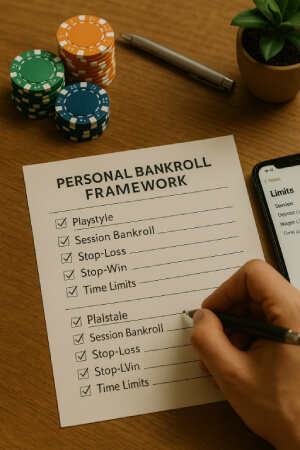
Bankroll management is not one-size-fits-all. Each player has different goals, risk tolerance, time availability and gaming preferences. Creating a personalized framework ensures decisions feel natural rather than restrictive.
Step 1: Define Your Playstyle
Some players enjoy casual, low-volatility play. Others prefer intense, high-risk sessions. Understanding your own preferences helps align bankroll choices with emotional comfort.
Step 2: Set Clear Limits
Limits should include:
- Session bankroll
- Stop-loss amount
- Stop-win threshold
- Time limit per session
Writing these down or setting them inside casino tools increases accountability.
Step 3: Choose Appropriate Bet Sizes
Bet sizes should always match the session bankroll. Even when feeling confident, players should avoid raising bets dramatically. Consistency stabilizes results across all game types.
Step 4: Use Breaks Strategically
Breaks help combat fatigue, prevent tilt and allow players to reevaluate session results. Even short pauses improve clarity and reduce the risk of emotional reactiveness.
The Long-Term Value of Bankroll Management
Proper bankroll management transforms online gambling from reactive play into a structured, mindful activity. Instead of being driven by emotion, players take control of their habits, pacing and expectations.
Quick Links
Responsible gaming starts with awareness, which is why we launched a self-assessment tool to help individuals evaluate their gambling habits and make informed decisions.
— MaltaGamingAuthority (@MaltaGamingAuth) November 22, 2025
Access the tool here: https://t.co/RzHtEOGIxz#ESGW25 pic.twitter.com/6J2gmq4T5R
Support from family during recovery can offer understanding, rebuild trust and help to create a safe and stable environment.
— GambleAware (@gambleawaregb) November 21, 2025
Their encouragement and awareness can keep you grounded and connected to the help you need. pic.twitter.com/cp3iW2cm1f